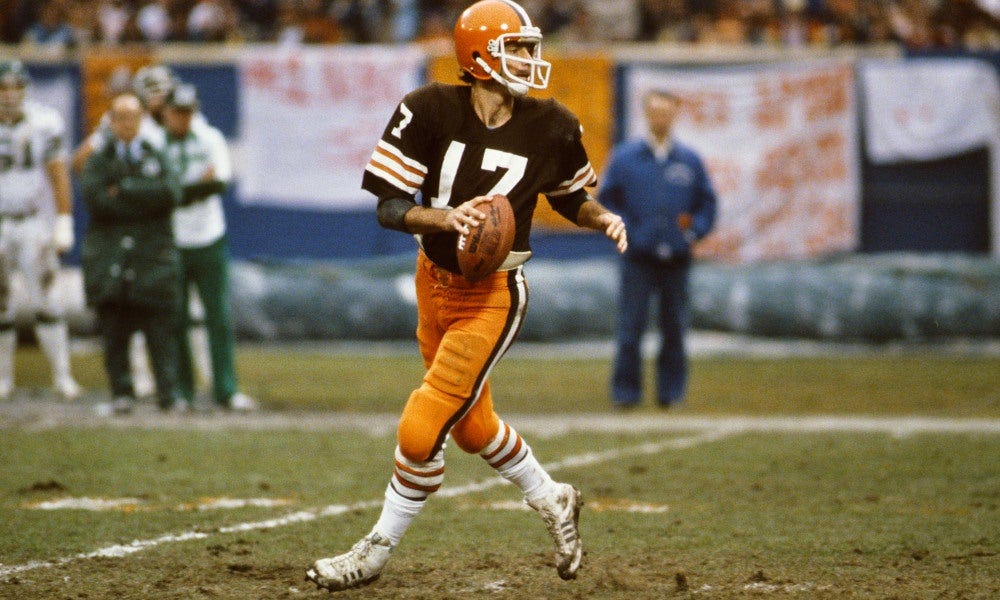
Brian Sipe
By the mid-1970s, the Browns had become a team plagued with transition and poor play. Blanton Collier had retired before the end of the 1970 season, of the 1970 season, and was replaced by his offensive coordinator, Nick Skorich. Skorich lasted four full seasons in Cleveland, from 1971 to 1974, before being fired by Art Modell after a run of poor seasons, including a 4-10 record in 1974, only the second losing season in franchise history up to that point. Starting quarterback Mike Phipps split time with rookie Brian Sipe, whom had spent the past two seasons on the team's reserve squad after being drafted out of San Diego State in the 13th round of the 1972 NFL Draft, which is why 1974 is technically considered his rookie season. Skorich's replacement as head coach was Forrest Gregg, who had played under Vince Lombardi in Green Bay. In Gregg's first season in charge, the Browns went 3-11. Ironically, the Browns first win that season, after starting 0-9, came against the Cincinnati Bengals, a team that Paul Brown formed in 1967 after the Browns fired him, and was serving as the head coach, general manager and owner at the time. The team improved in 1976, going 9-5 but missing the playoffs. Brian Sipe became the startign quarterback that season. In 1977, Modell and Gregg began to feud and, with the team at a 6-7 record towards the end of the 1977 season after Sipe had gotten ijured earlier in the year, Modell asked Gregg to resign, which he did. After a coaching search led by Modell and general manager Peter Hadhazy, the Browns hired New Orleans Saints receivers coach Sam Rutigliano as head coach. Sipe's play improved massively under his new head coach in 1978, which is also when the NFL moved to a 16 game schedule. Sipe had two main targets in receiver Reggie Rucker, whom the Browns had signed in 1975 as a free agent, and Ozzie Newsome, a rookie tight end the Browns drafted in 1978 with a pick they got after trading away Mike Phipps.
Brian Sipe
Sam Rutigliano had earned himself a reputation as being a bit of a gambler. He liked to tinker. He liked to take chances and call trick plays in situations where no one else would dare to do so. This philosophy would earn him the nickname "Riverboat Sam". He was once quoted as saying that "security is for cowards" and that "I believe in gambling". This philosophy of his began to bear fruit in the 1979 season opener against the New York Jets, which the Browns won in a nailbiter on a field goal by their kicker, Don Cockroft, as time expired. Following that game, Rutigliano said that "If we continue to play 'em that way all year, I'll be gone before the 10th game because my heart just won't take it". The very next week, the Browns earned a win over the Kansas City Chiefs by a score of 27-24, thanks to a touchdown pass from Sipe to Rucker with 52 seconds left. Once again, the very next week, the Browns improbably beat the Baltimore Colts 13-10 thanks in large part to the Colts kicker, Toni Linhart, missing three field goals. The now legendarry "Kardiac Kids" nickname first started floating around Cleveland Plain Dealer columist Hal Lebovitz who began using the term throughout 1979 to describe the relentless heart stopping victories the Browns were achieving seemingly every single week, in the same sorts of improbable ways. The magic went dormant for the next seven games, in which the Browns went 3-4, until they entered their week 12 home game vs the Miami Dolphins, which the Browns won 30-24 in overtime. In describing the chaos and magic that was the 1979 Browns, Toledo Blade columist Jim Taylor wrote that "You should never pipe Browns games into an intensive care unit, expose them to anyone weak of pulse" and that " They're one of those teams that stands 8-4, and could easily be 1-11". The Browns finished the 1979 season with a 9-7 record. The magic returned in the 1980 season, starting with a fourth quarter Browns game winning touchdown in a win against the Chiefs. The Browns continued their magic, beating the Packers on a last play touchdown, close wins over the Steelers and Bears (the latter of which saw Brian Sipe break Otto Graham's team record for passing yards) and a 28-27 win over the Colts. This magic helped the Browns finished the 1980 regular season with an 11-5 record. That record earned the Browns their first playoff appearance since 1972. The Browns first playoff opponent that year was the Oakland Raiders. It was a tight low scoring game all the way through. With 2:22 left on the clock, the Browns trailed 14-12. But, Sipe drove the offense down to the Raiders 14 yard line with 56 seconds on the clock. Instead of playing for a field goal, Rutigliano wanted to go for a touchdown, due to Cockroft having a rough day throughout the game. And so, he called a passing play called "Red Right 88". On the play, Sipe was intercepted by Raiders safety Mike Davis, and the Browns lost. Red Right 88 became one of the most infamous moments in the history of Cleveland sports, and became synonymous, and a bit of an omen, for the heartbreak that the Browns, and most of Cleveland sports, would face in the immediate and near future. In the 1981 season, the magic was seemingly completely gone. The Browns finished 5-11, although the Browns managed to defeat both teams that would eventually play in that year's Super Bowl in the 49ers and Bengals. After a few more seasons of nothing, the Kardiac Kids were seemingly officially dead. It became official when Sipe signed to play for the New Jersey Generals, a team in the upstart United States Football League owned by Donald Trump.
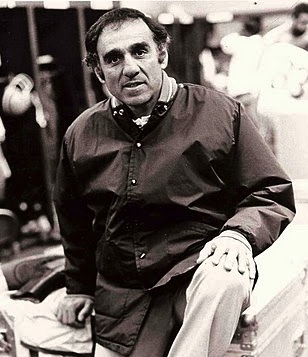
Sam Rutigliano
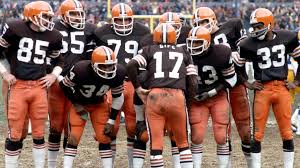
Kardiac Kids
During training camp before the 1984 season, cornerbacks Hanford Dixon and Frank Minnifield sought to inspire the team, specifically the defensive linemen. To do so, they began barking at them in between plays and also reportedly called them "the Dogs". The media quickly picked up on the name, helped by the Browns' defense playing much better throughout the season. Fans started to wear face paint and dog masks. This section of the fanbase became known as the "Dawg Pound". Today, the Dawg Pound can be found in the east end zone of Huntington Bank Field, the Browns current home stadium.
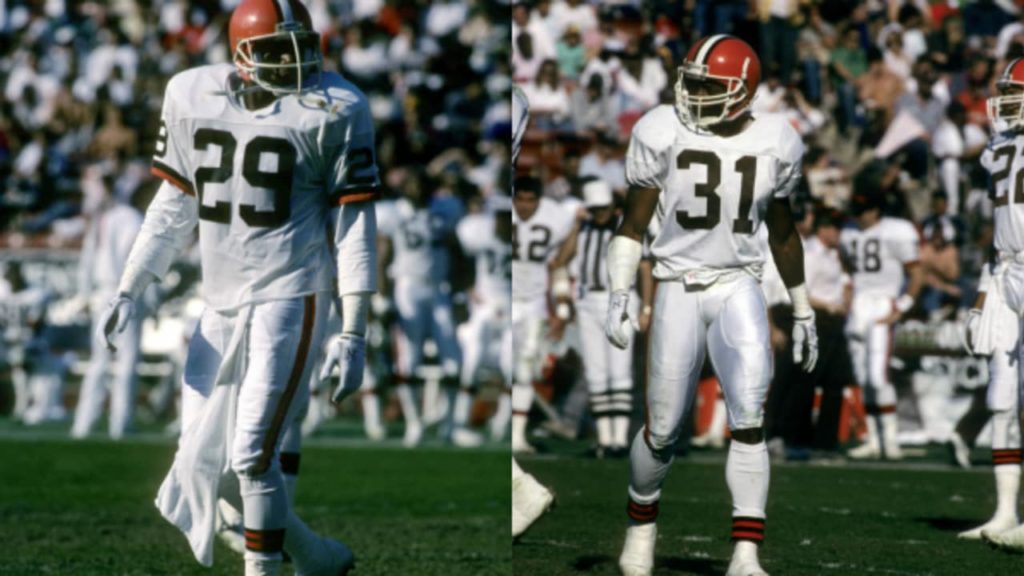
Hanford Dixon and Frank Minnifield
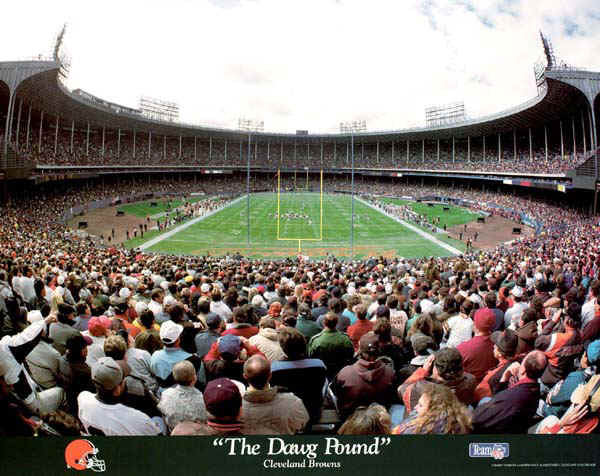
Original Dawg Pound
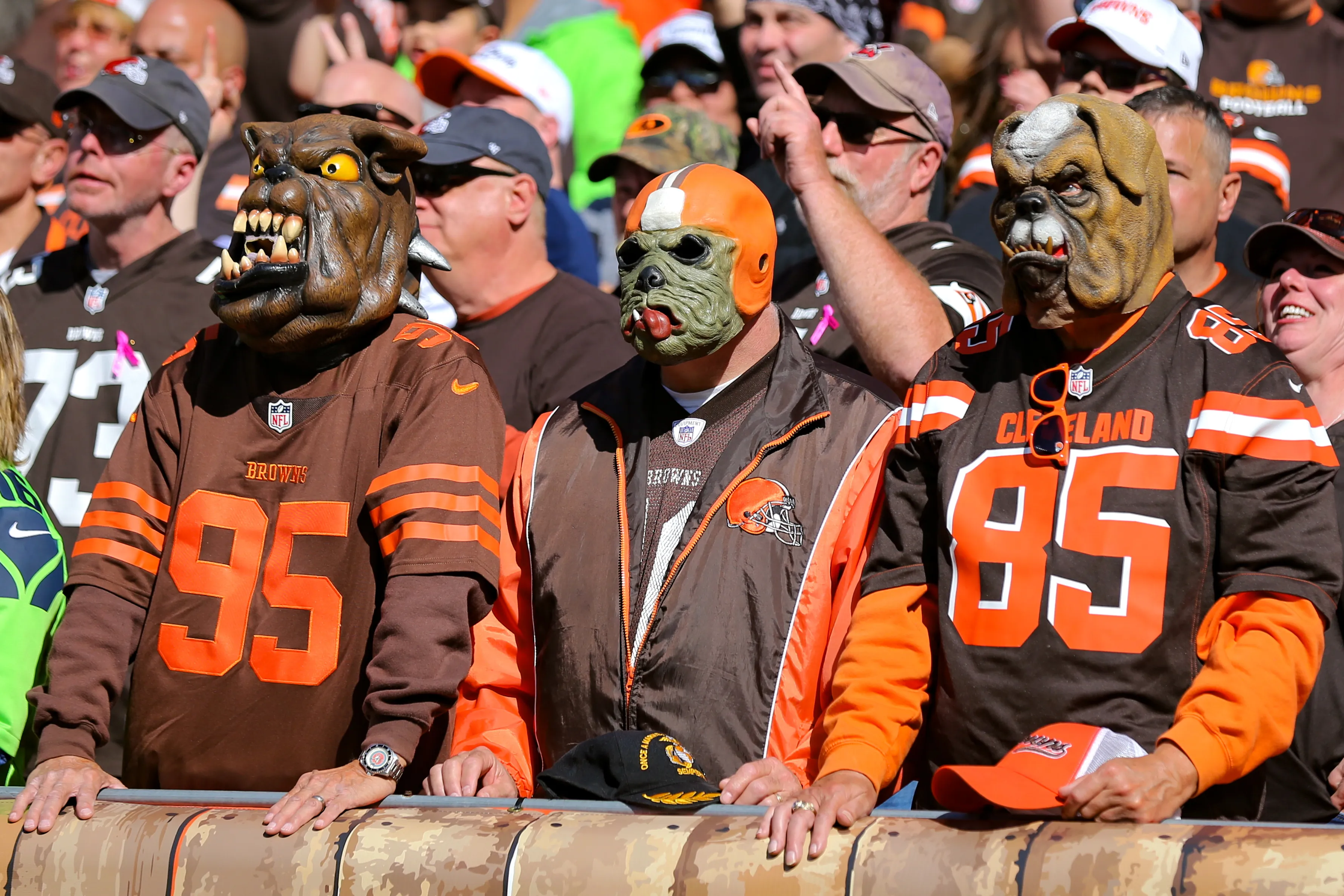
Current Dawg Pound
The drafting of quarterback Bernie Kosar out of the University of Miami in the 1985 NFL Supplemental Draft, thanks to Kosar utilizing loopholes to ensure that he could play for his hometown Browns, brought in a new and successful era for the Browns. The lengths the Bernie went to to play for the Browns immediately made him beloved by the fanbase. With the Browns now under the direction of head coach Marty Schottenheimer, Bernie Kosar made his NFL debut in Week 5 of the 1985 season vs the Patriots after he was subbed in at halftime, helping the Browns get a 24-20 win that day. The Browns were up and down in 1985, finishing 8-8. Kosar played well in spurts, aided by his running back duo of Earnest Byner and Kevin Mack, who each rushed for over 1,000 yards that season. The Browns somehow managed to make the playofs that season, although they blew a 21-3 lead to Dan Marino and the Dolphins and lost. The 1986 season saw the Browns return to the elite status that they started their existence with. Kosar had a phenomenal season, throwing to receivers such as Brian Brennan, Ozzie Newsome and rookie Webster Slaughter. The defense, led by Dixon and Minnifield, was one of the best. One of the highlights of the regular season was a two game sweep of the rival Pittsburgh Steelers, and snapping a 16 game losing streak at the Steelers' Three Rivers Stadium. For their 12-4 record, the Browns won the division and earned home field advantage during the ensuing playoff run. The NEw York Jets rolled into Cleveland as the Browns first playoff opponent, and lead 20-10 in the fourth quarter. The Browns mounted a furious comeback to tie the game at 20 before winning the game 23-20 in a double overtime thriller, the team's first playoff win in 17 years. For their win, the Browns got to host John Elway and the Denver Broncos in the AFC Championship game and for the right to go to the Super Bowl. It was an incredible game, and the Browns were winning 20-13 with just over five and a half minutes left in the fourth quarter. Pinned deep in his own territory, John Elway proceeded to lead one of the most legendary drives in NFL history, now literally called "The Drive", marching 98 yards to tie the game at 20, with kicker Rich Karlis winning the game 23-20 in overtime for the Broncos with a field goal. It is remembered as one of the biggest meltdowns in Cleveland sports history. The Browns kept winning in 1987 though, going 10-5 and beat the Indianapolis Colts in the divisional round to set up an AFC Championship rematch with Elway and the Broncos, this time in Denver. After trailing 21-3 at halftime, the Browns put forth a furious second half rally to tie the game at 31 in the 4th quarter. With the Broncos leading 38-31, the Browns were inside the Broncos 8 yard line with a little over a minute left, looking to tie the game once more and force overtime. However, in a moment that came to be known as "The Fumble", Earnest Byner fumbled the ball at the Broncos 1 yard line right as he was about to hit the end zone, which Denver recovered, and won the game from there. The Fumble was the beginning of the end of this era of Browns football. The next few seasons were marred by injuries and other changes. The Browns and Broncos actually matched up in the AFC Championship for a third time in four years in 1989, with the Browns now under the care of head coach Bud Carson, though the Broncos won in a blowout.
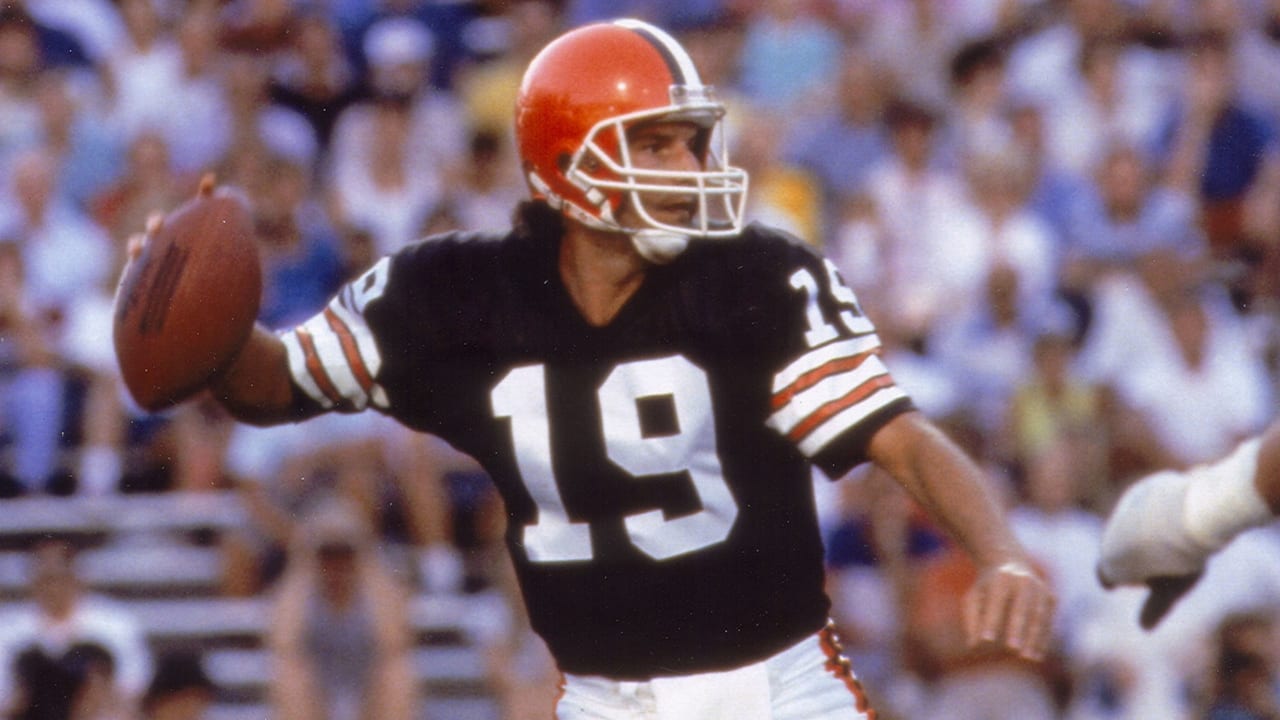
Bernie Kosar
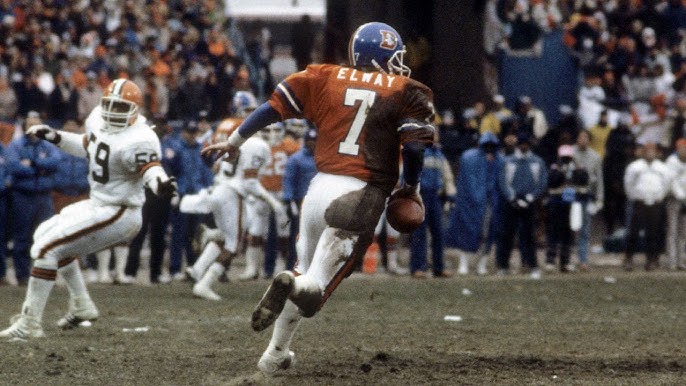
The Drive
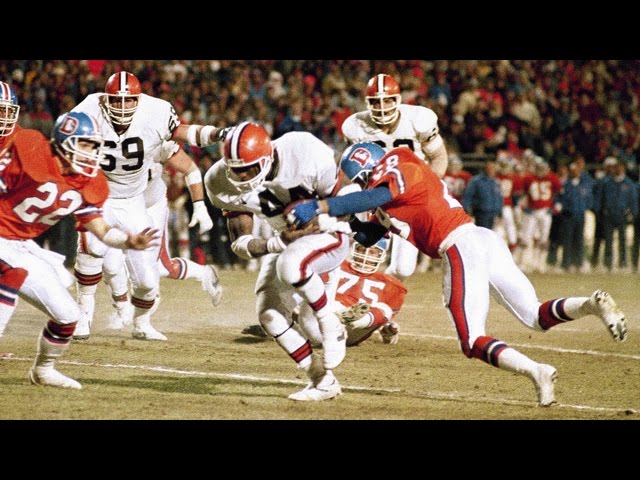
The Fumble
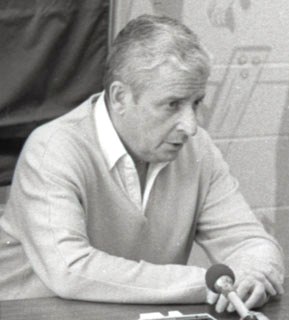
Art Modell found himself in financial trouble in 1994. The beginning of said trouble could be traced back to 1973, when he worked out a deal to lease Cleveland Municipal Stadium from the city of Cleveland for a small amount of money. The stadium was "falling apart" by this time. In the 80s, Modell also found himself at the center of lawsuits, stemming from Bob Gries (another part owner of the team) who felt that he was being ignored by Modell in regards to team operations. In addition, in the 90s, the Cleveland Indians also engaged with disputes against Modell regarding Modell collecting most of the money made from games and suites at Cleveland Stadium, even during Indians' home games and then refusing to share it with them. These disputes caused the Indians to leave Cleveland Municipal Stadium and build their own stadium, which came to be called Jacobs Field, which opened in 1994. Needless to say, this sudden loss of a big part of revenue caused Modell to start losing money at a fast pace, with Modell claiming to have lost $21 million between 1993 and 1994. All of this drama, which had sent Modell's reputation straight into the toilet, led to what came next. Modell began to feel a strong desire to leave Cleveland. Modell met with officials from Baltimore to discuss moving the team there to fill the void that was left when the Colts bolted for Indianapolis. In the middle of the 1995 season, with the Browns sitting at 4-4, rumors that Modell was moving the team leaked. Modell later said that he was forced to move, also saying that the bridge between him and Cleveland was "down, burned, disappeared". The city of Cleveland immediately sued to attempt to stop the move. The rest of the 1995 season saw the city of Cleveland, Modell and the NFL happen in the background as the Browns collapsed to a 5-11 finish, only winning the regular season finale vs Cincinnati. During that game, fans in the Dawg Pound rained debris, beer bottles and entire sections of seats onto the field in protest and anger. In February 1996, a compromise was reached. Modell would be allowed to move his team to Baltimore, but he would have to leave the Browns name, colors, logo and history before for when the team returned, effectively putting the Browns into a state of hibernation for a few years. Modell also had to pay the city of Cleveland $9.3 million to help with the lost revenue from the years the Browns were gone, as well as $2.25 million for the cities legal fees. The team that Modell moved to Baltimore eventually became known as the Baltimore Ravens.
Art Modell